Espresso Grinding: The Impact of Burr Sharpness on Post-Brew Water Retention
Not supportedSharp and dull burrs left the same amount of water in the espresso puck. Burr sharpness made no difference to post-brew water retention.
- Claim tested
- Dull burrs change how much water an espresso puck retains.
- Result
- ○ Not supported
- Also used
- Mazzer Major E, La Marzocco Linea, Smart Tamp, Ohaus lab scales, AWS scale, Scace II
Abstract
The goal of this study was to examine the effect of sharp versus dull grinder burrs on the ability of water to saturate a puck of espresso grinds. To assess the level of saturation, post-brew water retained in the puck was recorded. No difference was seen in water retention for the sharp versus dull burr conditions.
Disclosures
We have no vested interest in either product being tested.
Authors
Joe and Jeremy
Introduction
In his book The Professional Barista’s Handbook, Scott Rao mentions, “I had this problem once due to using small, dull, flat burrs; upon inspecting the spent coffee pucks I found that 20 to 25% of each puck was still completely dry” (p. 8). We interpreted this to mean, upon visual inspection of a spent puck, 20-25% of it appeared to have not been saturated with water, theoretically leaving behind many solubles that could have been extracted but were not. While we are unsure how Rao determined his percentage, we set out to investigate a difference in the amount of water that was retained in the spent grounds. Our approach was to measure the dry dose weight, extract a set amount of espresso, and weigh the used puck. Based on Rao’s comment, we expected to see a difference in weight between pucks ground from sharp burrs versus those ground with dull burrs, with the dull blade pucks retaining less water.
Methods
For this study, we used the following equipment:
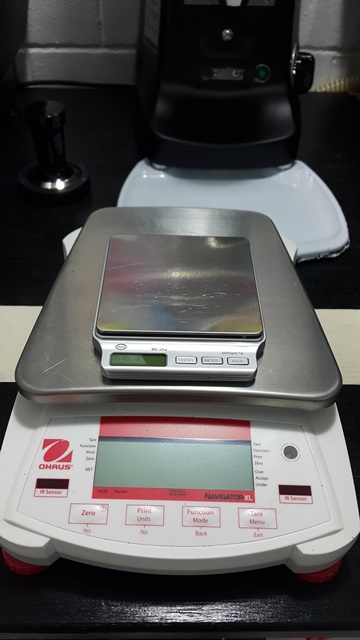
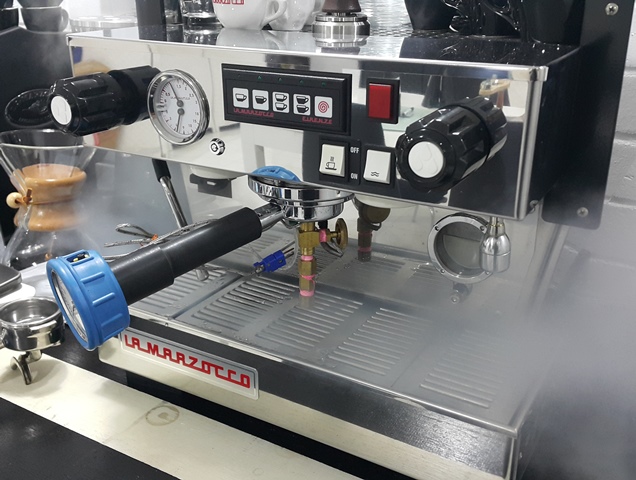
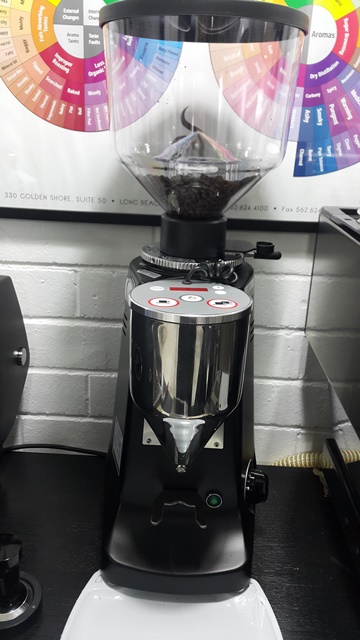
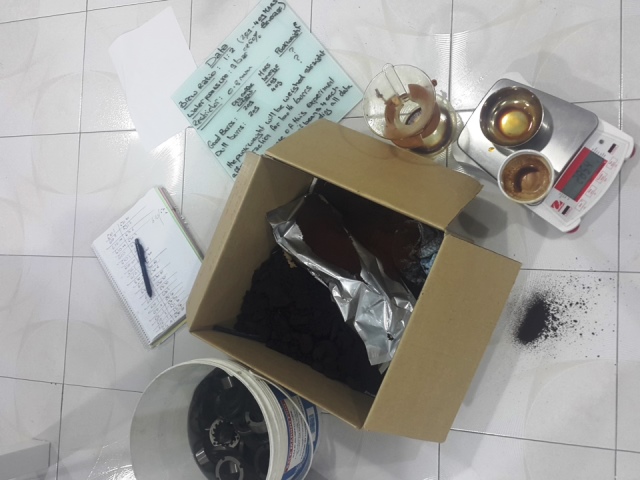
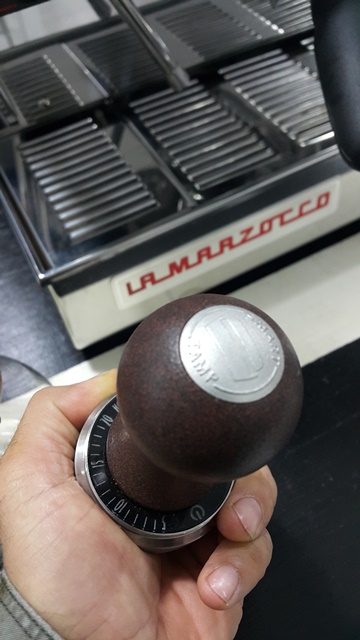
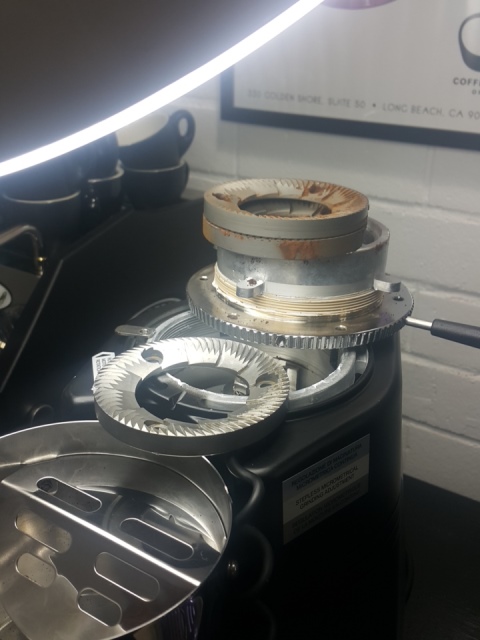
- La Marzocco Linea, single group fitted with 0.8mm restrictor and a double-spout portafilter with the original LM basket set at 9 bar water pressure (verified with a Scace II)
- Mazzer Major E
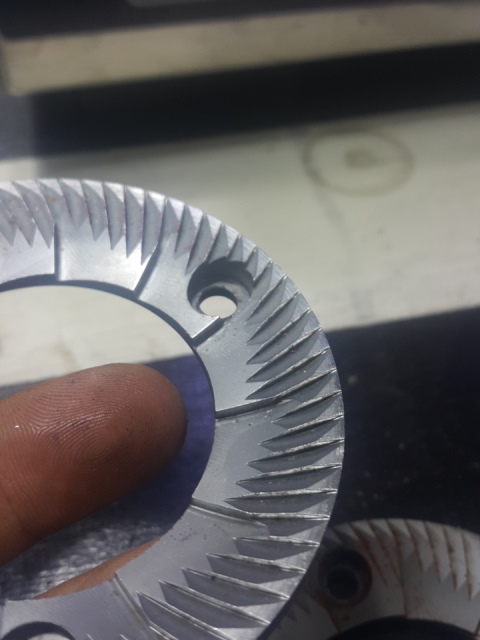
- One set of sharp burrs (previously been used to grind approximately 2 kg of coffee)
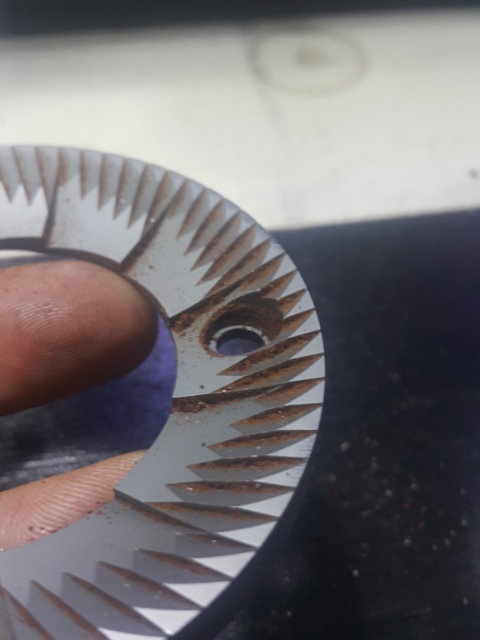
- One set of dull burrs (previously been used to grind approximately 1500kg of coffee)
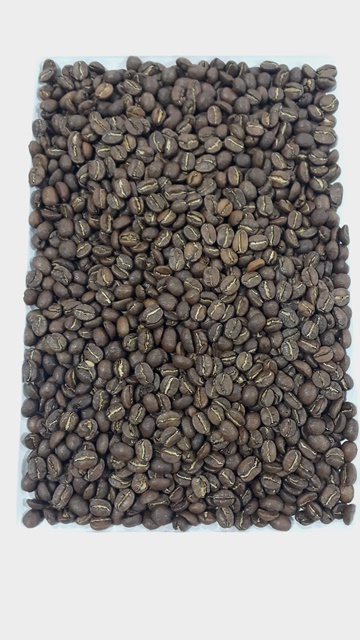
- Single origin Guatemala coffee beans (Agtron values — 71 whole bean; 76 ground)
- Two scales (Ohaus to measure the dry coffee and the wet puck after extraction; AWS to measure the beverage mass)
- Pen and paper to record values
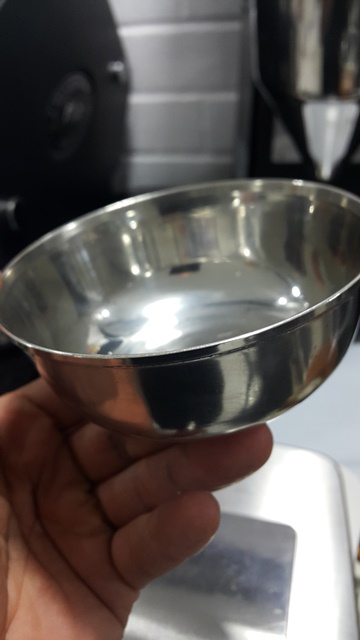
- Empty stainless steel shallow bowl for measuring the mass of the shot
- Smart Tamp tamper to standardize the pressure applied to the coffee
Being a fairly new grinder, the Mazzer had previously only ground 2kg of coffee two days prior, followed by a 1.3kg purge of coffee the day of the experiment. A brew ratio of 1g coffee to 2g brewed espresso was used (i.e., 20g dose for 40g final beverage mass).
For each shot pulled, a 20g dose of espresso was weighed and 40g of espresso was extracted. A total of 43 shots were pulled with the sharp burrs. The grinder was fitted with dull burrs, adjusted to dose 20g with the timer, and the procedures were repeated.
Results
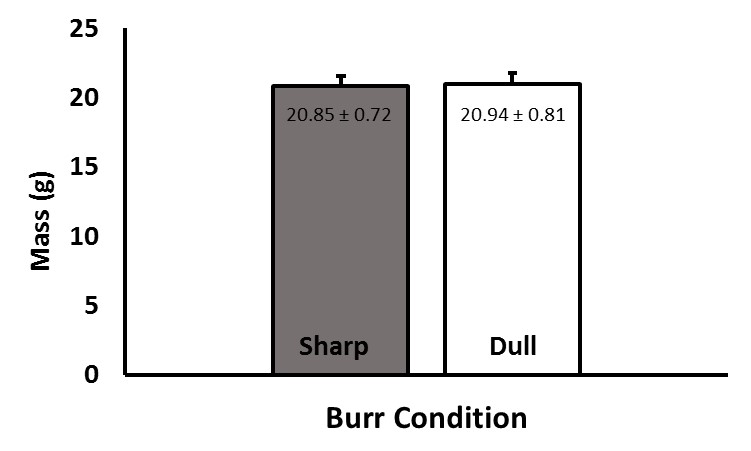
The portafilter weighed 590.2g and total weight, with the dose of espresso, was 610.2g (+0.1g a few times for both conditions due to some remaining moisture in the portafilter after a shot). Post-brew retained water was calculated as weight of the portafilter with wet coffee puck minus weight of the portafilter with dry coffee puck. See the below graph for average mass of retained water in each condition.
(Raw data can be downloaded in a tab delimited text file here. While we offer the data for your personal use, we kindly ask that you send a message to socraticcoffee@gmail.com before posting or presenting it in any public forum and attach appropriate acknowledgement.)
The sharp burr condition yielded a post-brew water retention weight of 20.85g with a standard deviation of 0.72g. The dull burr condition yielded a post-brew water retention weight of 20.94g with a standard deviation of 0.81g. Since we hypothesized a directionality of the difference (e.g., less water retained in dull burr condition), a one-tailed equal variance t-test was performed and failed to find a significant difference between the sharp and dull burr conditions (p = 0.30; two-tailed test, p = 0.59).
Conclusions
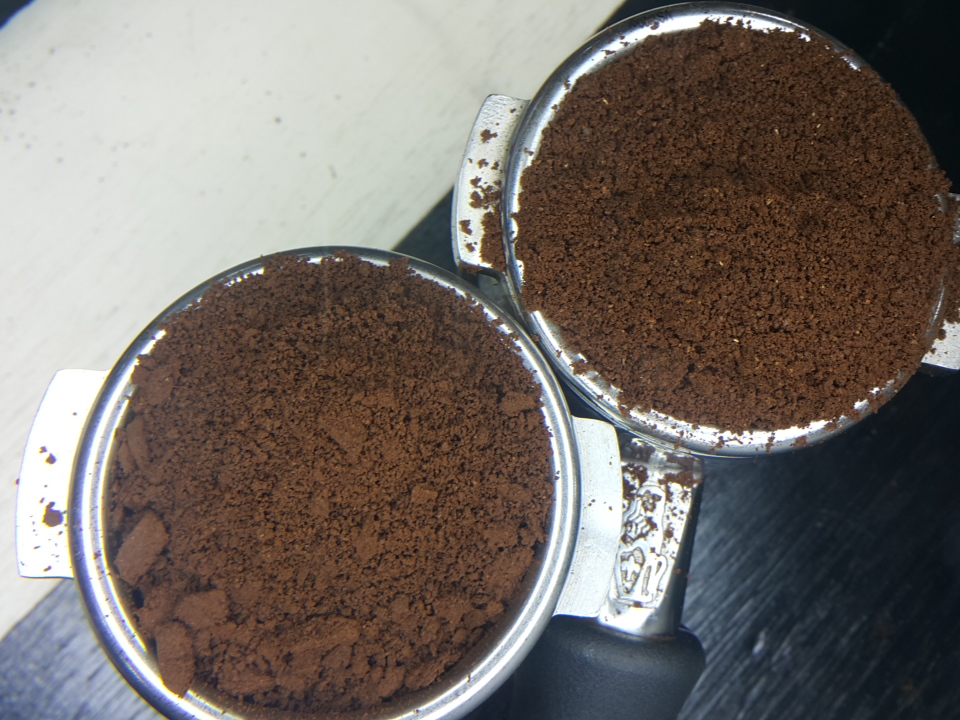
No statistical difference was seen between the sharp and dull blade post-brew water retention weights, demonstrating the quantity of water saturating the espresso puck did not vary based on burr condition. It may be possible that roast development would affect this outcome as the coffee grind morphology could potentially respond differently in the two burr conditions (e.g., fracturing differences). To relate this back to Rao’s statement, it is possible that while water retention did not vary, water penetration may have. This would imply the dispersion of water throughout the coffee bed varied, possibly leading to what is referred to as channeling and may be noticeable in the overall rate of extraction (we did not capture extraction flow rates for this study). And this seems to make sense, as visual inspection of the coffee grounds dispensed from the grinder with sharp burrs versus dull burrs shows changes in grind clumping (see picture to the right). However, we failed to see a weight difference in the retained water between conditions, meaning the same amount of water is being held in the spent espresso puck. If 20-25% of the grinds were not saturated, that would imply the same amount of water in the dull condition is being held in 75-80% of the total puck space. This seems unlikely; however, another study, using different methods, would have to be performed to more directly assess this. Visual inspection of a puck is most likely a rough estimate of water penetration/saturation and difficult to quantify, so other methods are needed.
Claim tested: Dull burrs change how much water an espresso puck retains. Also used: Mazzer Major E, La Marzocco Linea, Smart Tamp, Ohaus lab scales, AWS scale, Scace II.
Socratic Coffee (2015). Espresso Grinding: The Impact of Burr Sharpness on Post-Brew Water Retention. Study No. 1. socraticcoffee.com/2015/04/espresso-grinding-the-impact-of-the-sharpness-of-burrs-on-post-brew-water-retention/