Looking at Burr Sharpness and TDS in Espresso
SupportedDull burrs produced significantly lower espresso TDS than sharp burrs, which suggests TDS could help flag worn burrs.
- Claim tested
- Dull burrs lower espresso TDS.
- Result
- ● Supported
Abstract
This experiment assessed differences in espresso total dissolved solids (TDS) as a factor of burr sharpness. Ten shots were pulled for each condition (sharp burrs, dull burrs) and TDS measured using an Atago PAL-COFFEE refractometer. Results revealed a significant decrease in TDS in the dull burr condition (p = 0.00).
Disclosures
We have no vested interest in any of the products being tested.
Authors
Joe and Jeremy
Introduction
Maintenance of equipment is a critical part of making consistently good coffee. Further, given the costs of high end coffee equipment, it is important to have objective metrics to assess state of performance. For many settings, reliance solely on subjective perception (i.e., taste), with all of its caveats and potential for bias, is less desirable and could lead to significant quality fluctuations and/or inconsistencies. While simply a tool to help guide the way, much like a compass when someone is lost in the woods, refractometers have been adopted in the specialty coffee community as a means of quantifying the soluble concentration in coffee. It has been proposed that this tool can help provide information regarding the state of equipment (e.g., burr sharpness). We set out to test if a currently available coffee-oriented refractometer is useful in assessing burr sharpness, as we were curious if the impact of sharpness alone was significant enough to be detected by the device.
Methods
The coffee used for the experiment was a single origin Guatemalan (Agtron values: 71 whole bean; 76 ground). Coffee was rested for 6 days before use.
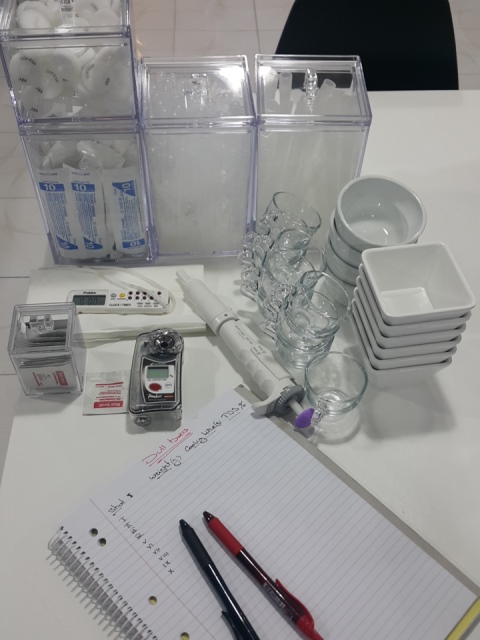
Equipment used:
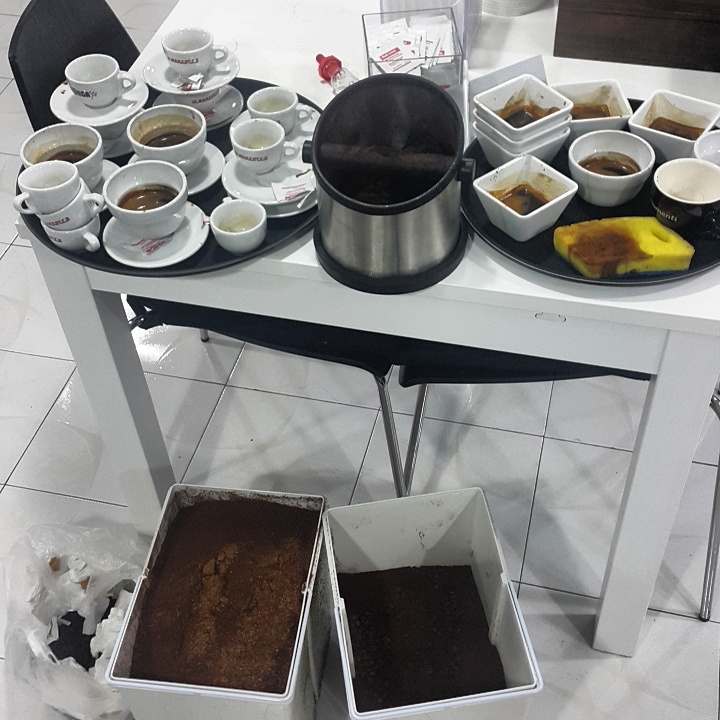
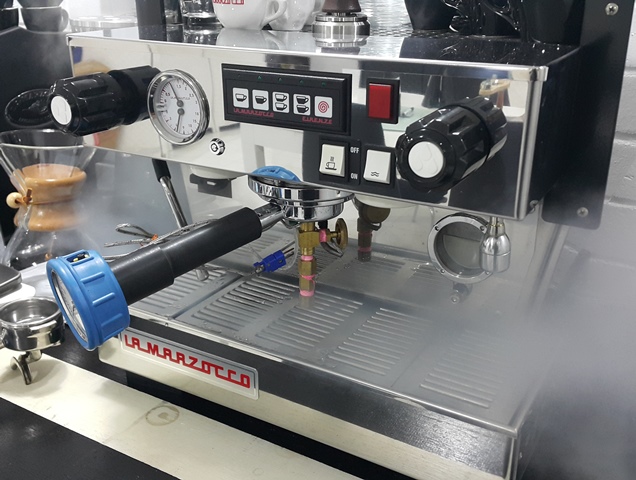
- La Marzocco (LM) Linea, single group fitted with 0.6mm restrictor and a naked portafilter with the original LM basket, set at 9 bar water pressure (verified with a Scace II); brewing temperature 94 degrees C regulated with a PID on board
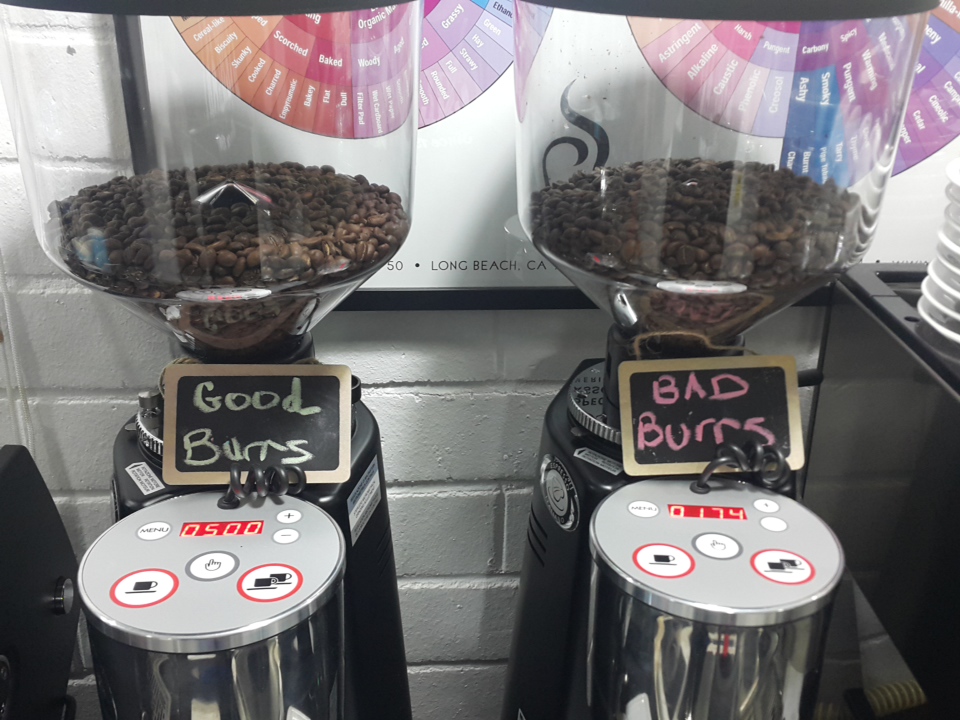
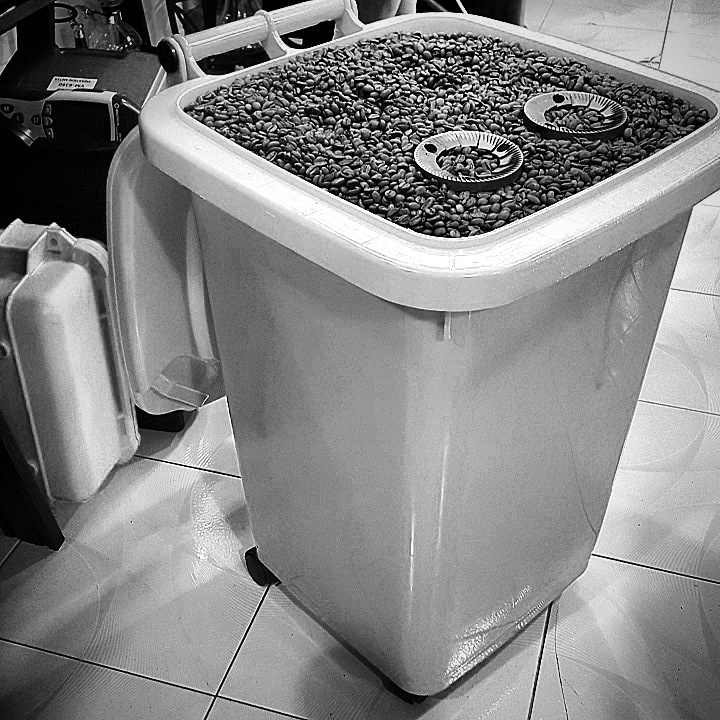
- 2 x Mazzer Major E
- One with a set of burrs seasoned with 8kg of coffee (“Sharp Burr” condition)
- One with a set of burrs previously used to grind approximately 1500kg of coffee (“Dull Burr” condition)
- Two scales (Ohaus to measure the dry coffee dose; AWS to measure the beverage mass)
- Pen and paper to record values
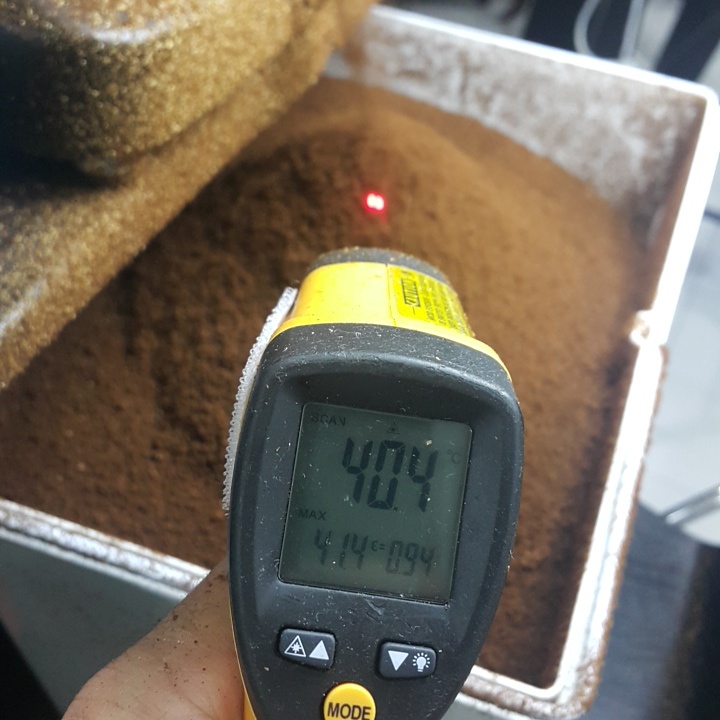
- FLIR thermal camera
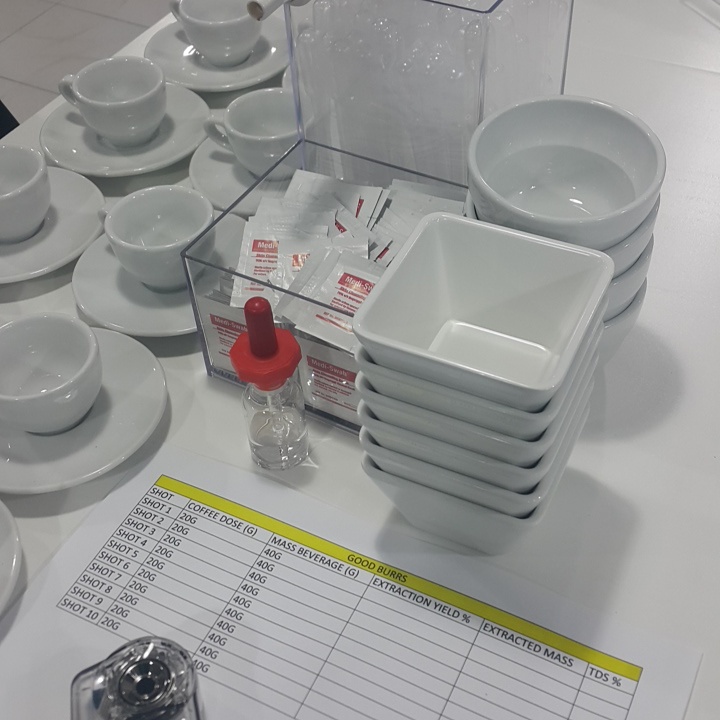
- 10 (for each grinder) x empty ramequin bowl for measuring the mass of the shot
- 10 (for each grinder) x ceramic/glass cups for TDS measurement
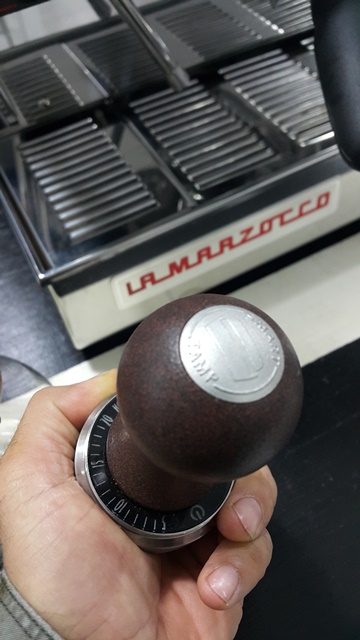
- Smart Tamp tamper to standardise the pressure applied to the coffee
- Atago PAL-COFFEE refractometer
- Distilled water
- Alcohol pads
- Pipettes
- Serviettes
Experiment was carried out over two nights; however, all conditions with the grinders, espresso machine, and equipment used was kept the same. For the grinders, blades were warmed up by grinding a 500 g of coffee beans. The room temperature was controlled with air conditoning at approx 22-24 degrees C for both nights. Distilled water used to zero the refractometer and was stored with the device at the ambient room temperature.
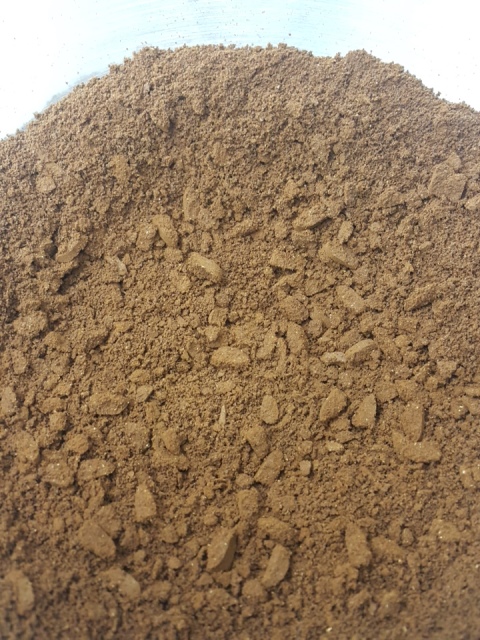
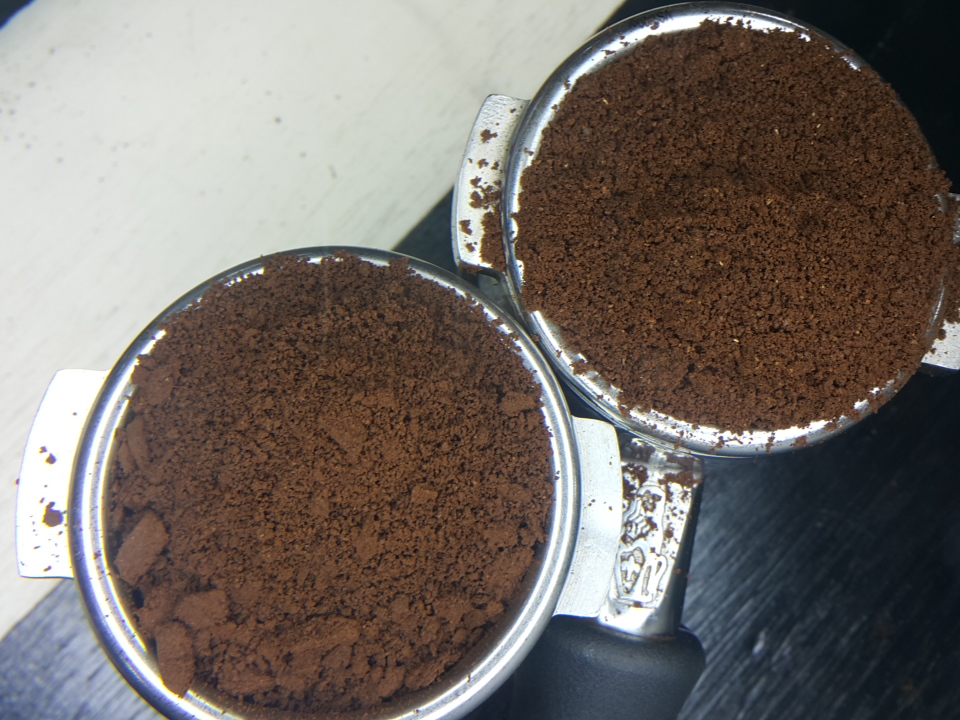
A brew ratio of 1g coffee to 2g brew weight was used (i.e., 20g dose for 40g final beverage mass). For each shot pulled, the coffee grinder was dialed in accordingly. [Note: Dialing in a grinder is subjective and open to interpretation, leaving room for potential confounds. For future experiments, we aim to minimise potential subjective influences in this area, possibly by using the our sieve sifting system to create equal distributions between conditions.]. A total of 10 shots were pulled for each grinder.
Atago refractometer was prepared and cleaned with alcohol pad before zeroing it with distilled water. Similarly, the refractometer was cleaned with a new alcohol pad after every reading.
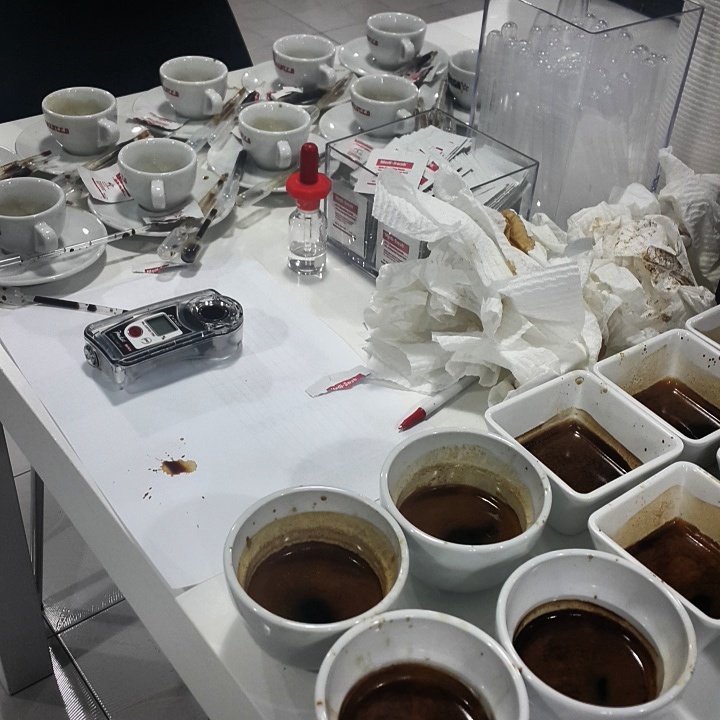
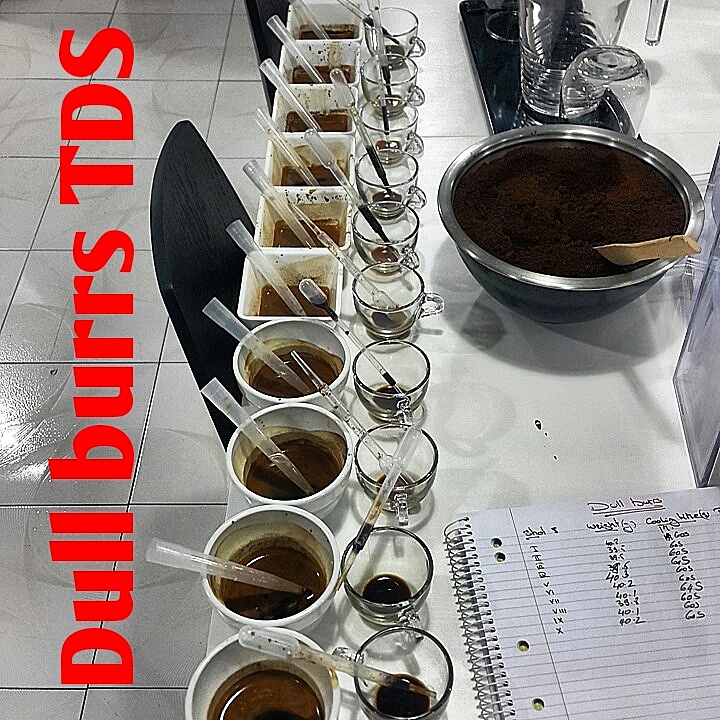
After pulling a shot, the beverage was allowed to cool for approximately 1 minute. Crema was removed with a spoon and a pipette, which was rinsed with the espresso, was used to siphon approximately 3 ml. This sample was then placed into a ceramic cup and swirled to further cool it down to 25 degrees. Temperature was verified with a thermal camera. A second pipette was then used to move the sample from the ceramic cup to the well of the refractometer. The TDS value was recorded.
**     **Results
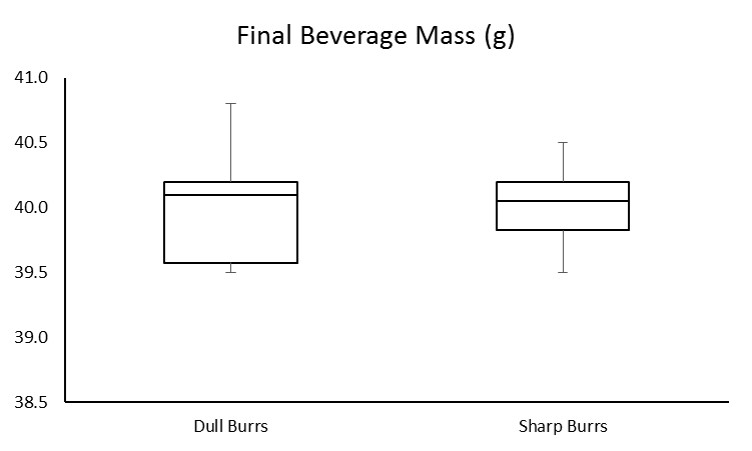
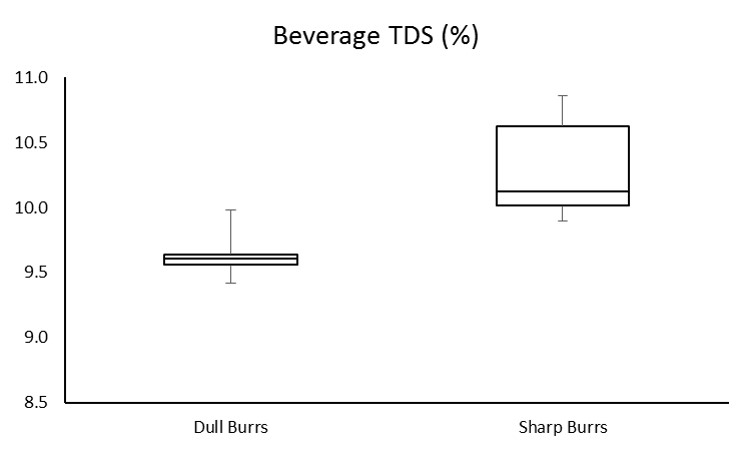
An analysis of variance (ANOVA) was used to compare shot weights and TDS readings. No significant difference was found in the shot weights between conditions (F(1,18) = 0.03, p = 0.86). However, a significant difference was found in TDS (F(1,18) = 4.41, p = 0.00), with higher TDS readings in the sharp burr condition.
(Raw data can be downloaded in a tab delimited text file here. As always, while we offer the data for your personal use, we kindly ask that you send a message to socraticcoffee@gmail.com before posting or presenting it in any public forum and attach appropriate acknowledgement.)
Conclusions
This study aimed to assess the impact of burr sharpness on beverage TDS. A difference in TDS was observed, with the sharp burr condition yielding significantly higher TDS than the dull burr condition. From this experiment, it would appear that TDS may be a useful tool to determine the sharpness of grinder burrs. However, additional experiments would need to be performed to assess the sensitivity of using TDS for sharpness of burr determinations (i.e., what quantity of grinding is necessary before quantifiable changes in TDS are observed). Further, the TDS changes produced by burr sharpness may or may not follow a linear curve. Some have suggested TDS may be useful in assessing when new blades have been “seasoned”. Quantifiable metrics should be developed to aid in this determination. Lastly, it would also be helpful to have a more objective measure of overall burr sharpness.
Claim tested: Dull burrs lower espresso TDS. Also used: Mazzer Major E, La Marzocco Linea, Smart Tamp, Atago PAL-COFFEE, Ohaus lab scales, AWS scale, Scace II.
Socratic Coffee (2015). Looking at Burr Sharpness and TDS in Espresso. Study No. 4. socraticcoffee.com/2015/05/total-dissolved-solids-study-to-measure-the-tds-of-dull-burrs-vs-good-burrs/